

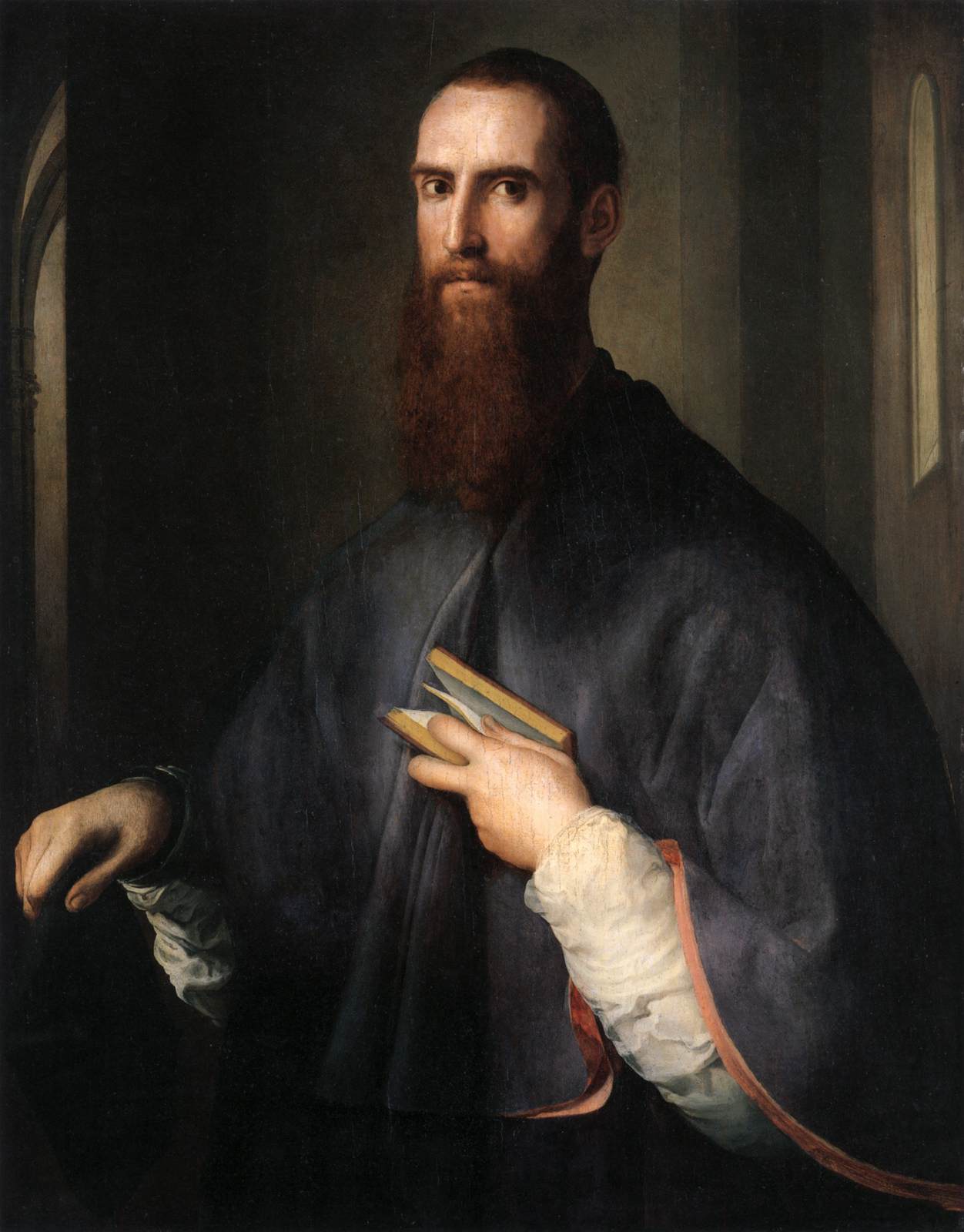
Jacopo da Pontormo died on New Year’s Eve in 1556 in Florence, where he had been the leading painter of his day. Among the most original Mannerist artists, Pontormo was popular with the Medici and other elites like the Capponi and Della Casa. Described as an eccentric by his biographer Giorgio Vasari, Pontormo was somewhat of a loner, prone to neuroses and slight obsessions as revealed in a diary begun in 1554 and kept through his death that catalogues his diet, illnesses, feelings, and other daily activities.
Reference: Janet Cox-Rearick. “Pontormo, Jacopo da.” Grove Art Online. Oxford Art Online. Oxford University Press.
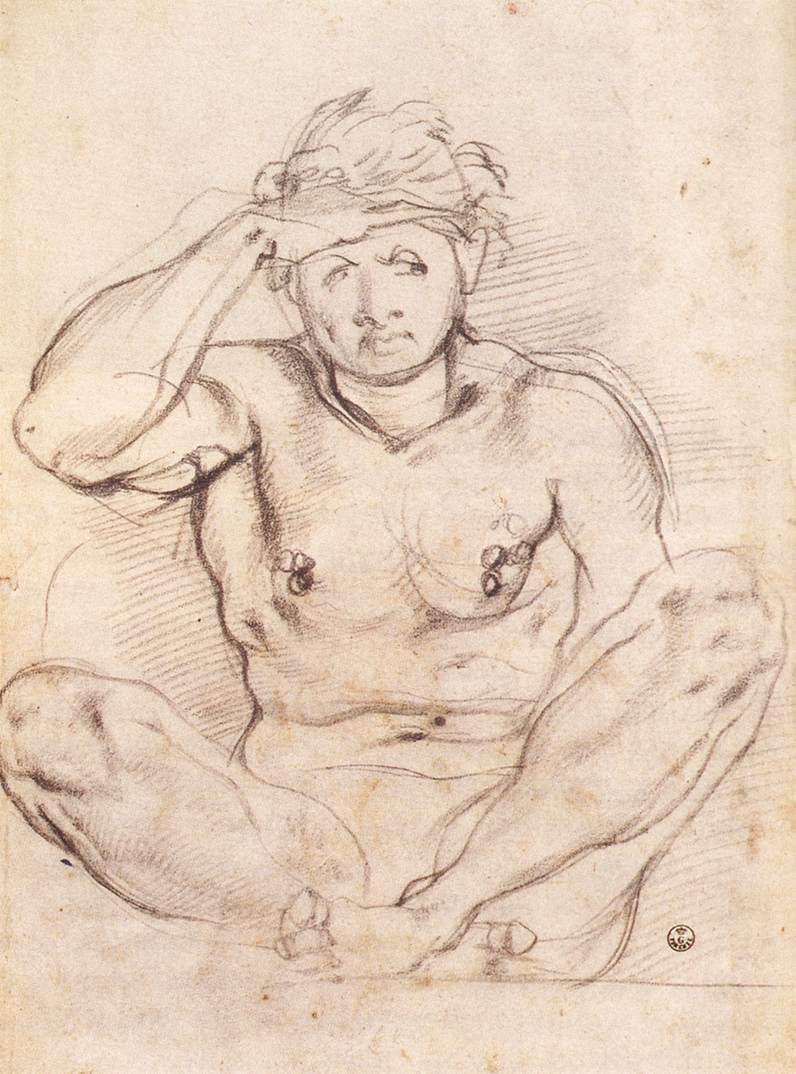
Study for Vertumnus and Pomona, 1519, drawing, Florence, Galleria degli Uffizi
Lamentation, oil on panel, 1525–8, Florence, S. Felìcita, Capponi Chapel; photo credit: Erich Lessing/Art Resource, NY
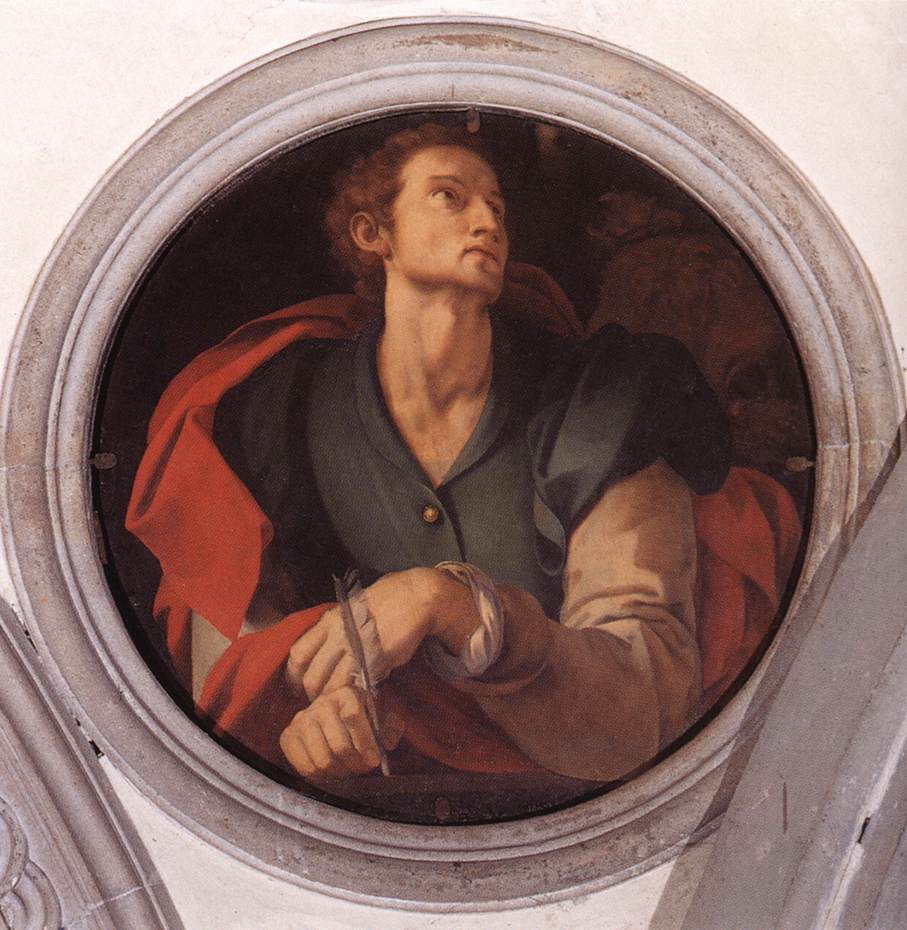
St. Luke, 1525–8, Florence, S. Felìcita, Capponi Chapel
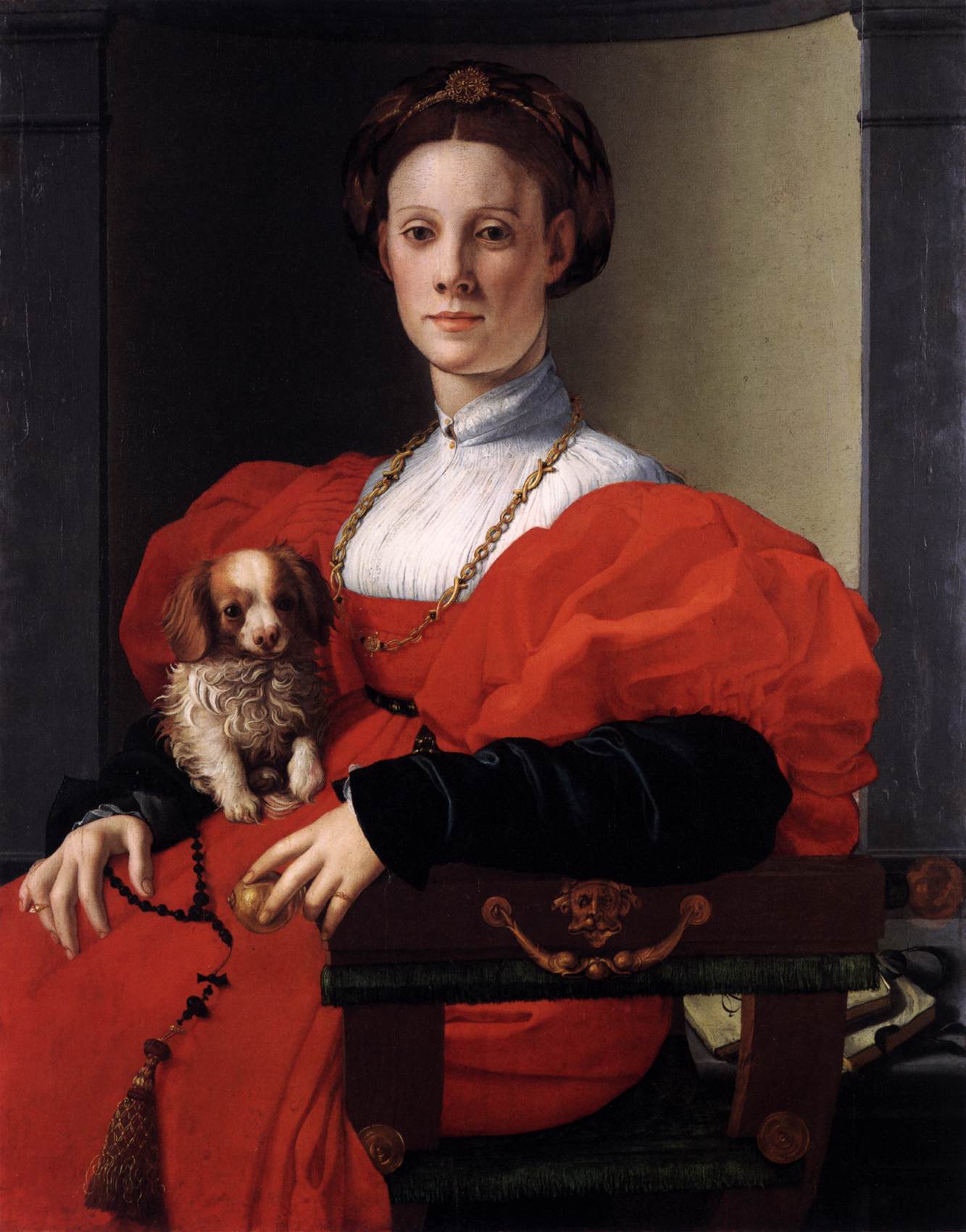
Portrait of a Lady in Red, 1530s, oil on wood, Frankfurt, Städelsches Kunstinstitut
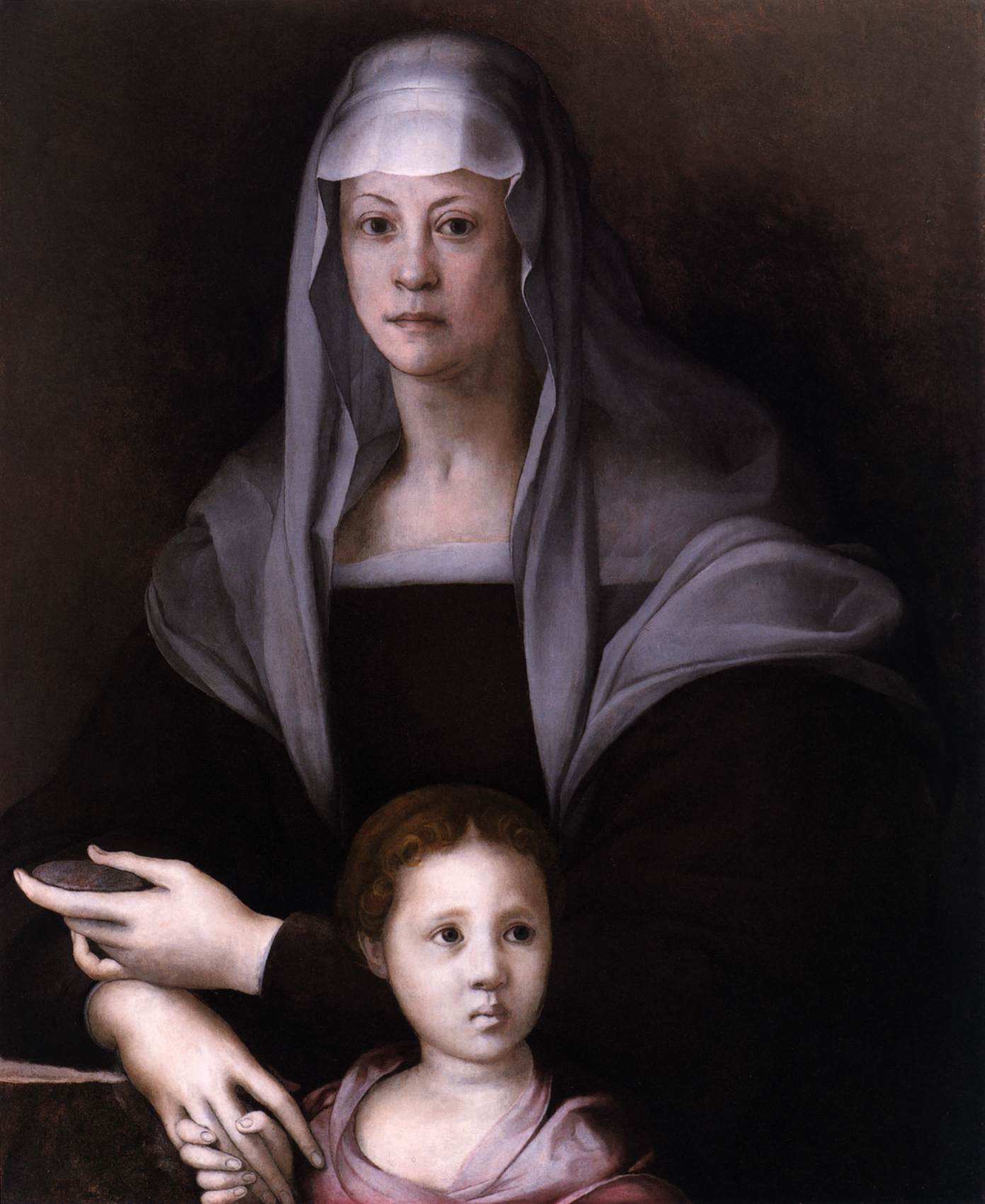
Maria Salviati with Giulia de’ Medici, c. 1537, oil on panel, Baltimorw, Walters Art Museum
Giovanni della Casa, 1542-46, oil on panel, Washington, National Gallery of Art
Did Pontormo live in a tree house toward the end of his life?
This is what Ludovica Sebregondi of the Palazzo Strozzi had to say about him:
A hypochondriac, a lunatic, “a trifle wild and strange”, “fickle” or capricious, “inspired and a recluse”: that’s basically the description we’re given of Jacopo Carucci, who was born in Pontormo (Puntormo or Puntorme, the village near Empoli after which he was named) on 24 May 1494. According to Vasari he “never went to festivals or to any other places where people gathered together, so as not to be caught in the press; and he was solitary beyond all belief.” He even displayed an introverted demeanour in his own house, a “building erected by an eccentric and solitary creature,” in which the bedroom was reached via a ladder which Jacopo could winch up to prevent anyone else from entering the room without his knowledge. The building was situated in what was then the Via Laura (now Via della Colonna). It didn’t have much in the way of street frontage but it opened out onto an inner courtyard where Pontormo had a vegetable garden (“I bought canes and willow binding for the orchard”) and fruit trees (“I planted the peach trees in the morning”), and where he sought cool shade in the summer heat (“No sooner had I risen and dressed on Sunday morning than I went down to the orchard where it was cool”).